
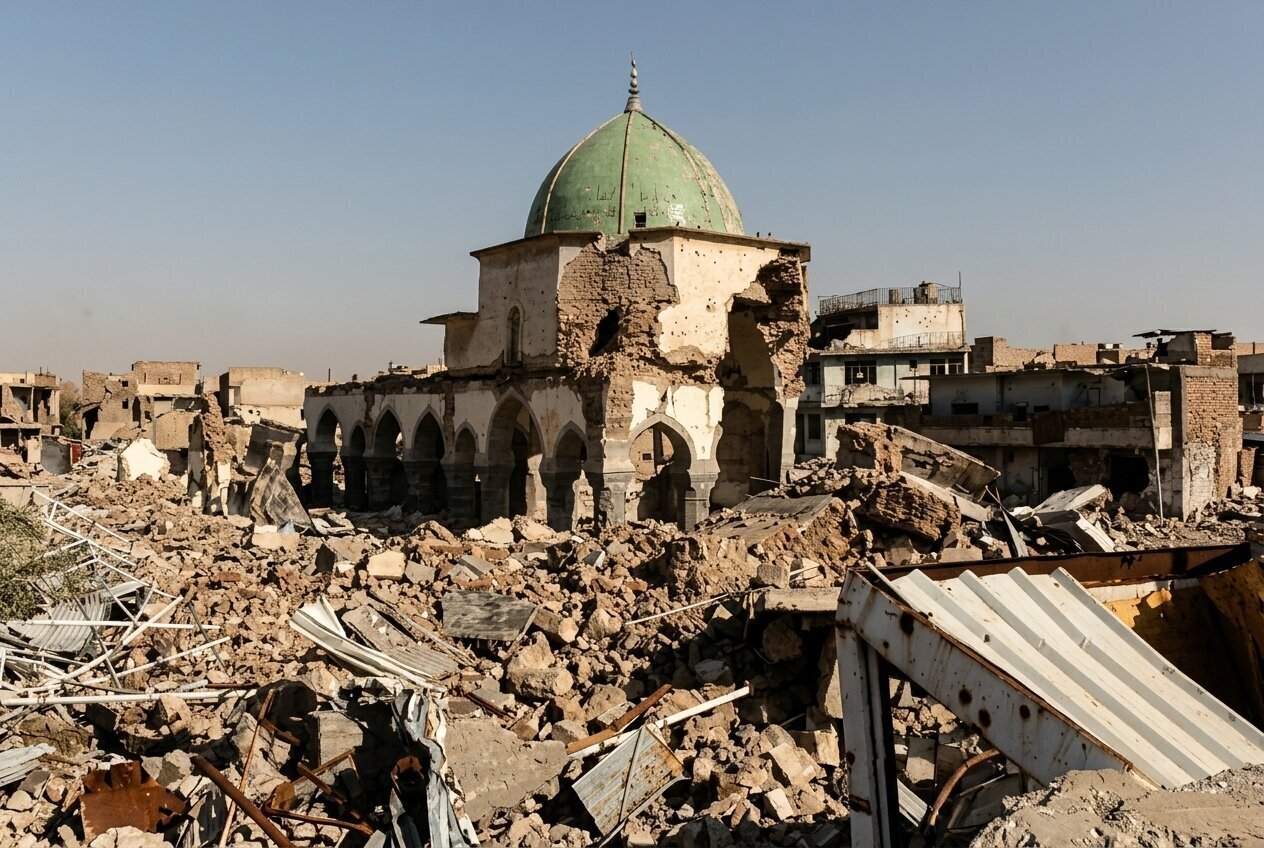
AhlulBayt News Agency: Saudi Arabia claims to protect the holy cities of Mecca and Medina while accusing others of threatening Islamic sacred sites. However, more than seven mosques in Yemen have reportedly been targeted in military attacks in less than two weeks. This highlights a glaring contradiction between Saudi Arabia's claims of protecting Islamic holy sites and the reported destruction of places of worship in Yemen.
a Yemeni media outlet has published an analytical article examining Saudi Arabia's claims of protecting Islamic holy sites and its accusations against the Ansarullah movement of endangering sacred places. The article draws attention to attacks on mosques in Yemen.
Saudi state media consistently focuses on the protection of Islamic holy sites, particularly Mecca and Medina. Riyadh repeatedly claims that these cities face threats and accuses the Ansarullah movement of involvement in actions that endanger them, while presenting itself as the custodian of the Two Holy Mosques.
However, when these claims are examined against developments on the ground, a serious question arises: How can Saudi Arabia claim to protect Mecca while mosques in Yemen are reportedly being targeted by its own military operations?
The continued use of the issue of Islamic holy sites in Saudi Arabia's political narrative can be viewed as an attempt to secure Islamic and Arab support and establish political legitimacy amid a complex political and military crisis. During conflicts, parties sometimes invoke religious symbols to gain public support and justify their positions. However, when such claims do not correspond with evidence and realities on the ground, they invite serious questions.
Much of the criticism centres on this contradiction. The conflict in Yemen concerns the country's sovereignty and territory, while Islamic holy sites, including Mecca and Medina, hold a special and inviolable status for Yemenis as well.
The most striking contradiction between Saudi Arabia's claims and its actions emerges from reports that more than seven mosques in Yemen were targeted in military attacks in less than two weeks.
Seven mosques! Not military bases, weapons depots or command centres, but places of worship where the call to prayer is heard, worshippers bow before God and place their foreheads on the ground in prayer.
Damaging mosques and destroying places of worship violates the sanctity of sites that are protected under both religious teachings and international humanitarian law. How can those responsible for demolishing mosques over the heads of worshippers claim to defend Islam? How can a country raise the banner of protecting the Two Holy Mosques while places of worship are reportedly reduced to ruins in Yemen?
This also exposes a profound moral contradiction. How can a political system claim to protect Islamic sacred sites and serve as the custodian of the Two Holy Mosques while its actions in Yemen appear contrary to the protection of places of worship?
Religious and ethical principles demand that anyone claiming to protect the houses of God must respect the sanctity of mosques and the lives of civilians everywhere in the world, rather than treating the sanctity of a holy site in Mecca differently from that of a mosque and its worshippers in Yemen.
The Holy Quran states in Surah Al-Baqarah, verse 114:
“Who is more unjust than those who prevent Allah's name from being mentioned in His mosques and strive towards their destruction?”
In light of this Quranic verse, destroying mosques and preventing people from worshipping Allah are clear manifestations of injustice. Given this explicit religious principle, how can claims of protecting Islamic sacred sites be justified while the destruction of mosques in Yemen is met with indifference?
Public opinion can no longer be satisfied merely by attractive slogans and emotionally charged statements that do not correspond with realities on the ground. People assess actions alongside declarations, and the reported incidents involving mosques in Yemen raise serious questions about claims of protecting Islamic holy sites.
The destroyed mosques may eventually be rebuilt, but the memory of worshippers who lost their lives in these attacks will remain. Likewise, claims of protecting Mecca and Medina cannot remain permanently beyond scrutiny or accountability for what has happened to mosques in Yemen.
How can someone who fails to respect even a small mosque in a Yemeni village claim to protect Masjid al-Haram?



Your Comment